How to Keep LEGO Sets Dust Free: A Display Collector's Prevention Guide
Environmental Setup, Smart Display Habits, and a Simple Maintenance Ritual
The best LEGO care routine is one that means you don't have to clean as often. Knowing how to keep LEGO sets dust free isn't just about cleaning — it's about setting up your display environment to reduce buildup in the first place.
This guide covers the practical strategies that experienced collectors use to minimize dust on their builds and extend the time between cleaning sessions.
Understanding Where Dust Comes From
Most household dust is a mix of skin flakes, fabric fibers, pet dander, and fine particulate from outside air. It's pulled through rooms by:
- HVAC systems, fans, and air conditioning units
- Open windows and doors
- Foot traffic and clothing movement
- Pets and soft furnishings
LEGO sets accumulate dust based on proximity to airflow sources and surface complexity. A flat baseplate collects far less than a highly textured castle wall or a dense Technic gearbox.
Environment: Where You Display Matters
Keep Displays Away from Vents and Registers
HVAC vents are the single biggest source of accelerated dust buildup. Airflow from vents carries fine particles directly onto nearby surfaces. If possible, position displays on walls or shelves away from ceiling vents, floor registers, and window-mounted air units.
Avoid High-Traffic Areas
Rooms with heavy foot traffic generate more suspended particulate from clothing, carpet fibers, and general movement. Lower-traffic spaces — a dedicated display room, office, or bedroom — will always have slower dust buildup than a living room or hallway.
Bookshelves with Backing vs. Open Shelving
Open shelving exposes builds on all sides. Shelving with a solid back panel reduces airflow around the rear of builds, which can meaningfully reduce dust settling. Glass-front display cases are the most effective dust prevention — though not always practical for all collections.
Keep Windows Closed in Dusty Conditions
On windy or high-pollen days, fine outdoor particles can enter through open windows and settle on nearby displays. This is particularly relevant for collectors near construction sites, rural areas, or regions with significant seasonal pollen.
Handling: How You Touch Your Builds
Clean Hands Every Time
Skin oils are among the hardest residues to remove from LEGO surfaces — particularly on smooth printed elements. Always handle display builds with clean, dry hands. Avoid touching surfaces you don't need to move.
Minimize Unnecessary Handling
Every time you pick up or move a display build, you expose it to more skin contact and potential debris transfer. For display-only sets, a general rule is: handle only when necessary to clean.
Maintenance: A Simple Prevention Ritual
Prevention and regular light maintenance work together. Here's the routine experienced collectors use:
Weekly
- Visual inspection — identify areas with visible buildup
- Quick surface pass with a soft brush on high-exposure sets
Every 2–4 Weeks
- Full surface sweep with Surface Brush (top to bottom, outward strokes)
- Air blower pass on recessed areas
- Microfiber wipe on flat surfaces
Monthly or Seasonally
- Complete 5-step cleaning method
- Inspect all elements for loosening or damage
- Wipe down shelving surfaces around the build
This routine — combined with the right environment setup — means you're cleaning less intensively each time and never letting dust accumulate enough to require aggressive removal.
For the full cleaning method, see our Ultimate Guide to Cleaning LEGO Sets. For step-by-step dust removal specifically, read our guide on how to remove dust from LEGO sets safely.
Building Long-Term Habits
The collectors with the best-looking displays aren't the ones who do the most intensive cleaning — they're the ones who've made small, consistent care habits part of their routine. A 10-minute sweep every few weeks is dramatically more effective than an hour-long deep clean twice a year.
For a full long-term strategy, see our LEGO maintenance guide for collectors.
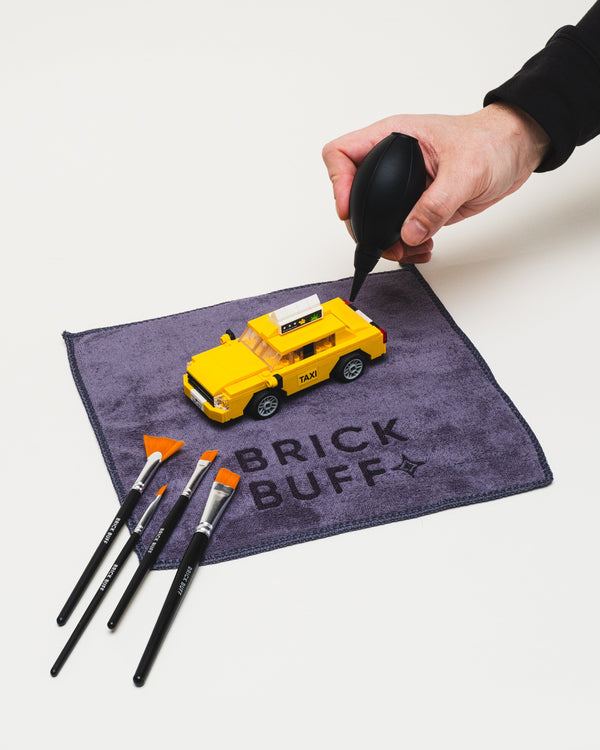
The Brick Buff Cleaning Kit is built around this philosophy — tools and a method designed for regular, light maintenance rather than heroic rescue cleaning.