How to Remove Dust from LEGO Sets Without Damaging Them
A Safe, Step-by-Step Dust Removal Guide for Display Collectors
Dust is inevitable — but damage doesn't have to be. Learning how to remove dust from LEGO sets correctly is one of the most important skills for any display collector. The wrong technique can scratch brick surfaces, dislodge small elements, or push dust deeper into recessed areas, making the problem worse.
This guide covers the correct dry-cleaning approach for assembled LEGO sets — the method that keeps your builds pristine without the risk of improper tools or techniques.
Why Proper Dust Removal Matters
Dust on LEGO isn't just cosmetic. Over time, particulate buildup:
- Bonds to plastic surfaces, making removal harder and riskier
- Settles into stud interiors, seam gaps, and recessed elements
- Dulls the surface finish of colored bricks, especially on dark pieces
- Can retain moisture in humid environments, contributing to discoloration
Regular, light maintenance is always safer than infrequent heavy cleaning. See our complete LEGO cleaning guide for the full picture.
What You Need
You don't need many tools — but the tools you use matter:
- Soft, anti-static brush (Surface Brush or similar) — for broad strokes
- Fine-tip detail brush — for tight joints, textures, and small elements
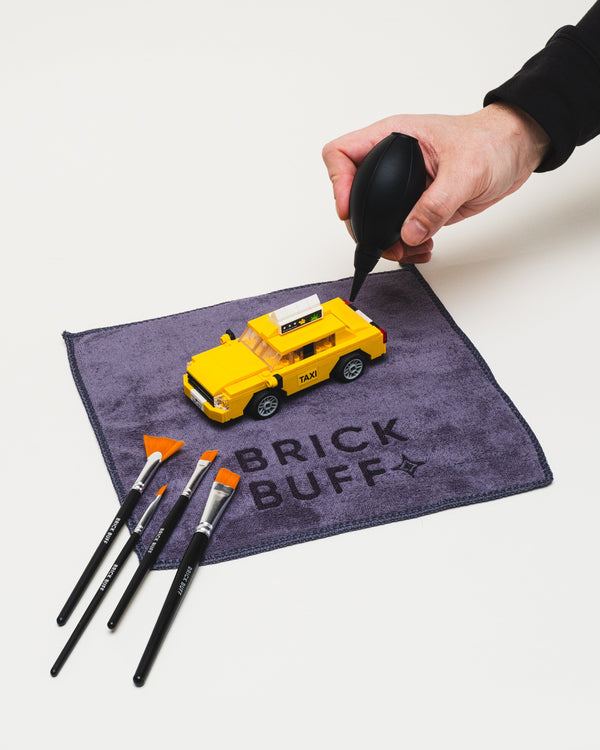
- Manual air blower — for clearing loosened dust from recesses
- Microfiber cloth — for final wipe on flat surfaces
Do not use: canned compressed air (too high-pressure), paper towels (abrasive), or household dusters (can spread rather than lift dust).
Step-by-Step: How to Remove Dust from LEGO Sets
Step 1 — Work Top to Bottom
Gravity is your ally. Start at the highest point of your build and work downward. This prevents already-cleaned surfaces from being re-dusted as you work lower sections.
Step 2 — Use Outward Brush Strokes
With the Surface Brush, use outward strokes — away from the center of studs, not in circles. This lifts dust up and off rather than pushing it into seams. Keep pressure light. The brush should do the work, not your hand force.
Step 3 — Detail Areas Second
Switch to the Detail Brush for smaller features: minifigure accessories, window mullions, Technic joints, and textured elements. Work methodically — one section at a time.
Step 4 — Clear with the Air Blower
After brushing, use the Manual Air Blower to clear loosened dust from crevices. Hold it 4–6 inches from the surface, use short controlled puffs, and angle toward openings and seam gaps. This removes particles that the brush can't reach without mechanical pressure.
Step 5 — Final Wipe
Finish with a Microfiber Cloth on flat surfaces — baseplates, large panels, and any smooth top surfaces. Use a single, light pass — no scrubbing.
Common Mistakes to Avoid
Circular Brushing
Circular motions push dust around rather than lifting it. They can also create micro-scratches on softer or older brick surfaces. Always use directional, outward strokes.
Too Much Pressure
Pressing hard with a brush doesn't remove more dust — it risks scratching surfaces and dislodging small elements. Light contact is all that's needed.
Skipping the Air Step
Brushing loosens dust but doesn't always remove it from deep crevices. The air blower is a critical step that ensures loosened particles actually leave the build.
Using Compressed Air Cans
Commercial compressed air releases a high-velocity stream that can physically knock loose fragile elements — especially on older or Technic-heavy builds. A manual blower gives controlled, gentle airflow without the risk.
How Often Should You Dust?
For display-only sets in a typical home environment, a light surface sweep every 2–4 weeks is sufficient. Increase frequency if builds are near vents, in high-traffic rooms, or in areas with pets.
Learn strategies to reduce dust accumulation in our guide on how to keep LEGO sets dust free.
The Right Tools Make It Easy
The Brick Buff Cleaning Kit includes all the tools referenced in this guide — the Surface Brush, Detail Brush, Manual Air Blower, and Microfiber Cloth — designed specifically for display LEGO care, with a method to match.
Ready to build the habit? Start with the 5-step method in our Ultimate Guide to Cleaning LEGO Sets.