How to Clean Display Collectibles Safely
A Damage-Free Cleaning Guide for Assembled Builds, Figures, and Display Sets
Display collectibles — whether LEGO sets, scale models, vinyl figures, or premium assembled builds — share one problem: they accumulate dust, oils, and environmental debris over time, and the wrong cleaning approach can cause more damage than the buildup itself.
This guide covers the safest methods to clean display collectibles without scratching surfaces, dislodging elements, or introducing new damage in the process of maintaining your collection.
Why Cleaning Collectibles Requires a Specific Approach
Most general cleaning advice — household sprays, microfiber wipes, compressed air — is designed for hard surfaces: countertops, screens, appliances. Display collectibles are different:
- Complex textured surfaces trap dust in recesses that cloths can't reach
- Painted, printed, or decorated elements are sensitive to friction and moisture
- Assembled builds can have loose or delicate structural connections
- Many finishes — matte, gloss, chrome, metallic — react differently to cleaners and abrasion
The safest cleaning approach respects this complexity. It starts dry, stays controlled, and uses tools suited for the job.
The Tools You Need (and What to Avoid)
Use:
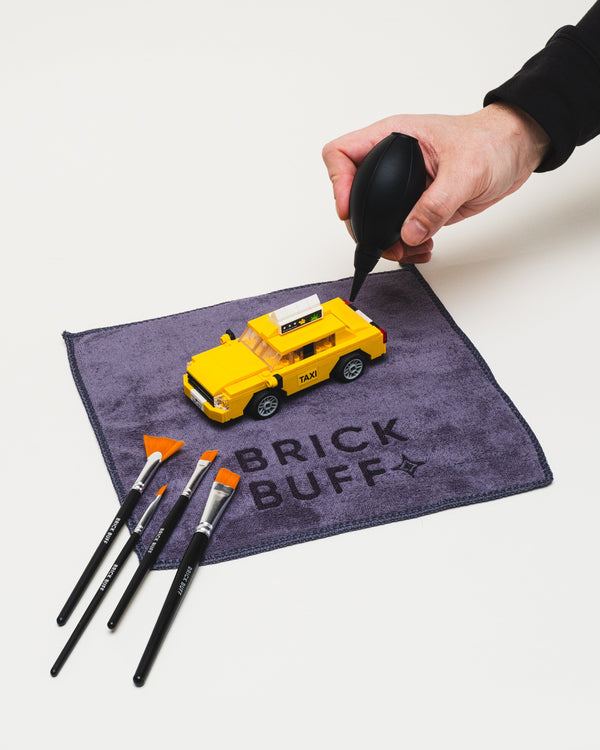
- Soft anti-static brushes — lift dust without scratching or generating static
- Fine-tip detail brushes — reach into seams, joints, and small features
- Manual air blower — controlled airflow to clear loosened dust from recesses
- Microfiber cloth — for final passes on smooth flat surfaces
Avoid:
- Paper towels — more abrasive than they appear; can scratch matte finishes
- Canned compressed air — high-pressure stream can dislodge fragile elements or force dust deeper
- Household cleaners and alcohol sprays — can cloud plastic, strip coatings, and leave residue that attracts more dust
- Feather dusters — redistribute dust more than they remove it
Step-by-Step: Safe Cleaning for Display Collectibles
Step 1 — Start Completely Dry
Unless a specific piece is water-safe and disassembled, start with dry tools only. Moisture on assembled builds traps between surfaces, causing spotting and long-term residue. Dry brushing removes the vast majority of routine dust buildup safely.
Step 2 — Work Top to Bottom
Gravity matters. Begin at the highest point of your build and work downward so loosened dust falls away from areas you've already cleaned. This prevents double-work and avoids resettling debris on finished sections.
Step 3 — Broad Surfaces First, Details Second
Use your largest soft brush to sweep major surfaces — flat panels, roofs, large figures, wide bases. Use outward strokes away from raised edges and connection points, not circular motions. Circular brushing creates micro-scratches over time.
Switch to a fine detail brush for recessed areas: seam lines, joints, decorative grooves, facial features on figures, and fine texture work.
Step 4 — Clear With Controlled Air
After brushing, use a manual air blower to clear dust that's been loosened but not yet removed from tight recesses. Hold 4–6 inches away, use short controlled puffs, and angle toward openings. Don't press tightly against the surface — you want to clear, not push inward.
Step 5 — Final Polish on Smooth Surfaces
For flat, smooth areas — display bases, glass elements, large smooth panels — a single light pass with a clean microfiber cloth removes any remaining film or smudging. One directional pass, no scrubbing.
Special Considerations by Collectible Type
LEGO and Assembled Brick Builds
The dry brushing method is ideal for LEGO sets and brick-system builds. Avoid water on assembled builds. For detailed LEGO-specific guidance, see our Ultimate Guide to Cleaning LEGO Sets.
Vinyl and Resin Figures
Most vinyl and resin figures can be dry-cleaned with a soft brush. Avoid any liquids on painted figures — even water can lift hand-applied paint or cause adhesion issues on older pieces.
Scale Models and Diecast
Scale models often have fine detail that traps dust aggressively. The detail brush is critical here. For metal diecast pieces, microfiber on flat surfaces works well. Avoid anything with silicone or wax — it attracts dust and can alter surface finish.
Premium Display Sets and Limited Editions
For high-value pieces, err on the side of less intervention. A light brush pass every 2–4 weeks is always safer than a periodic aggressive clean. Consistent light maintenance preserves both the finish and the structural integrity of the piece.
How Often Should You Clean Display Collectibles?
For most display environments, a light surface sweep every 2–4 weeks prevents significant buildup. More frequent cleaning is warranted if:
- Displays are near HVAC vents or open windows
- The room has pets or sees heavy foot traffic
- Pieces are handled frequently
Learn strategies to reduce dust accumulation in our guide on keeping display sets dust free.
Building a Sustainable Care Routine
The collectors with the best-looking displays aren't necessarily cleaning the most — they're cleaning consistently and using the right tools. A 10-minute sweep every few weeks compounds significantly over months and years. Neglect compounds equally, just in the wrong direction.
For long-term preservation strategies beyond cleaning, see our guide on how to care for collectibles long term.
The Brick Buff Cleaning Kit was designed for exactly this purpose — 8 tools and a 5-step method built for display collectibles and assembled builds, so every cleaning session is safe, methodical, and satisfying.